
Clients that Have Excess Cerebrospinal Fluid on the Brain
I’ve been researching about the effects of excess CS fluid on the brain for many years. My interest in this topic increased when I heard that Billy Joel was diagnosed with normal pressure hydrocephalus and cancelled several concerts. Billy Joel is a famous singer-musician from the 70s through the early 2000s, who wrote songs like Piano Man, Big Shot, Just the Way You Are, and many other hits.

According to the Cleveland Clinic, “Normal pressure hydrocephalus (NPH) is a brain condition that happens when [cerebrospinal] fluid buildup inside or around your brain disrupts your brain function. That can affect several brain-related abilities, including thinking and concentrating, memory, movement and more.”
According to the Hydrocephalus Association, an estimated 800,000 Americans have NPH, but only around 20% are diagnosed properly. NPH is often misdiagnosed as Alzheimer’s or Parkinson’s disease. Common symptoms include awkward gait, dementia, and urinary incontinence (also referred to as “wet, wacky, and wobbly”). There can be other symptoms, too.
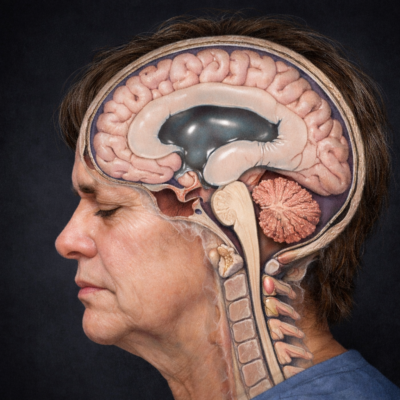
The gold standard for treating excess CS fluid around the brain is to put in a shunt, which, according to Johns Hopkins Medicine, is “a hollow tube surgically placed in the brain…to help drain cerebrospinal fluid and redirect it to another location in the body where it can be reabsorbed.” Usually, it’s redirected into the abdomen.
Although a shunt is the preferred medical procedure for people with hydrocephalus conditions, the question arises: Is this the only treatment available? What about alternative forms of treatment, such as Cranial-Sacral Therapy? These are questions I try to answer below.
Quick aside, here are links to Ray of Light Training:
– Live classes on Cranial-Sacral Therapy (CST) and Direct-Indirect Technique (DIT)
– Online Courses for CST and DIT
Consequences of Excess CS fluid in and around the Brain
From my training and research, I know how important CS fluid is for many brain and spinal cord functions – protection from injury, providing nutrients to brain and other nerve cells, removing wastes, transporting hormones and ions, and many other tasks. The entire Central Nervous System (CNS) depends upon free flow of the CS fluid within the Cranial-Sacral system.
One of the key characteristics of this fluid is that it is manufactured from oxygenated blood within the brain, while also being drained out to the circulatory system carrying waste products from the brain and spinal cord. This process of adding more fluid and draining some out occurs in cycles day and night for your entire life.
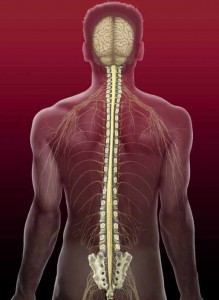
If the CS fluid is continually added around the brain tissue without a similar amount of draining, pressure builds up on the brain. Too much pressure can result in pathological symptoms such as those found in NPH and other forms of hydrocephalus.
In other words, excess CS fluid in and around the brain and spinal cord can result in a dramatically deteriorated quality of life, greatly affecting that person and everyone around them.
A huge factor with NPH and similar conditions is getting a correct diagnosis. As mentioned earlier, it is estimated that only 20% of such cases are diagnosed properly. Without a proper diagnosis, a person may experience harsh symptoms for years, while ineffective treatments are continually tried and replaced by other ineffective treatments.
My Experience Working with a Client with a Hydrocephalus Condition
As a Cranial-Sacral Therapist and a longtime teacher of Cranial-Sacral Therapy to hundreds of Massage Therapists and other practitioners, I was curious about Billy Joel’s condition and how CST treatment could help him.
I have worked with many clients over the years using CST for a variety of conditions, including brain tumors, ADD or ADHD, cancer, headaches or migraines, back pain, and much more.
One client I worked on had hydrocephalus that affected her gait and caused a variety of neurological symptoms. She had a shunt placed in her cranium to drain out the excess CS fluid. That first shunt made things worse, so they had to replace it with another one.
The second shunt worked well for a few years, until it didn’t. Her condition deteriorated so dramatically that she went into a coma and became totally unresponsive. Doctors determined that the shunt was infected, causing meningitis. After a new shunt and months of tests at clinics around the country, doctors were unable to determine why she stayed in a coma for several months.
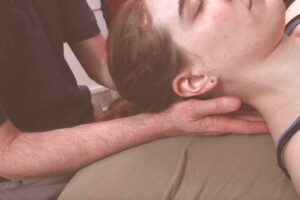
This client’s husband had me come in and do CST with her over a period of a couple months – in a hospital, in rehab clinics, and eventually at home. He also brought in a variety of other practitioners to treat her, as well as friends to talk to her or sing to her – anything to stimulate her brain to “wake up” and join the world again.
Long story short – this client did indeed wake up slowly but surely after nearly six months. She re-learned how to walk and talk and do all the activities she was accustomed to doing. She is now happy, energetic, and a joy to be around.
Did CST “Cure” this Client?
I can’t say definitively that CST helped her escape her coma and successfully return to this world. I do know that the gentle CST techniques help reduce restrictions around the brain and spine caused by skeletal bones that are locked, as well as restrictions in the dural tissue around the brain and spinal cord.
This dural tissue can clump together into fascial adhesions in the same way that fascia can dehydrate and glue together into “knots” anywhere else in the body. These restrictions inhibit the flow of that ever-important CS fluid.
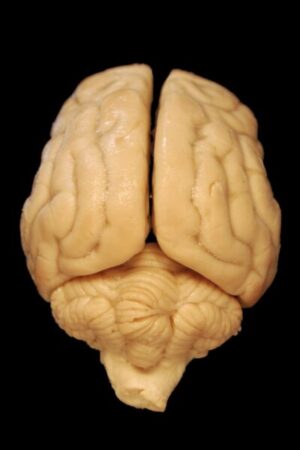
CST helps to encourage freer flow of the CS fluid in and around the brain and spinal cord, so that the CNS is happy and functioning optimally. And when the CNS is happy, the rest of the body is happy too, since everything is affected by the quality of the nerve signals coming from the CNS. It’s kind of like Mom – when Mom is happy, everybody is happy!
What I can say about this client is that the new shunt helped drain the excess CS fluid and reduce pressure on the brain. That coupled with CST and other “alternative” modalities, along with other types of brain stimulation, such as music and talking, helped this client get her life back. Her husband, children, and dozens of friends were overjoyed to see her smiling, singing, and making jokes again.

I never talk in terms of “curing” or “healing” anyone I work on. I don’t believe that’s my job. My goal is to create a safe place where the client can trust me to be fully present, bringing forth my tools, experience, and intuition to enable the client’s internal healing mechanisms to get unstuck and create the type of healing that is best for that client at that time.
My job is to provide the best treatment session that I’m capable of and get my ego out of the way. The rest is up to the client. I’ve had a lot of success with thousands of clients over the years. But I know that I’m just a facilitator. They do the “healing” themselves.
A Case Study on Using CST with a Client with NPH
Admittedly, there is not a lot of research on using CST with clients that have some form of hydrocephalus. I did come across an interesting case study published in the Cureus Journal of Medical Science, entitled “Craniosacral Therapy Use in Normal Pressure Hydrocephalus.”
This study noted that CS fluid can build up around the brain due to a variety of reasons, in particular “due to obstruction and fibrosis of subarachnoid villi.” This is the fascial tissue around the brain that helps drain the used CS fluid and its wastes and helps get it to the venous system for eventual elimination from the body.
In other words, this tissue can also dehydrate, glue together, and harden into fascial adhesions, just like dysfunctional tissue anywhere in the body. The consequence is that those waste products from the CNS are not leaving the area around brain and spinal cord properly, and harmful pressure is continually building on the brain cells.
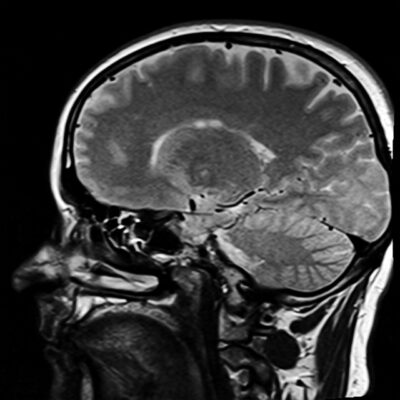
The study also notes that, while a shunt is often a very successful treatment, “nearly 16% of shunts in adults fail over six years…Only a fraction of patients with NPH receive shunt surgery, and only 60%-80% improve following shunt surgery…Furthermore, complications include mechanical malfunctions on the shunt, blockages, and infections.”
The subject of this study was a 78-year-old male who had several classic symptoms of NPH. He was correctly diagnosed with that condition and referred for shunt surgery. He had a history of diabetes mellitus, hypertension, hyperlipidemia, and a stroke. He did not want to have an invasive procedure, so he asked his osteopathic physician about alternatives.
According to the study authors, “he was offered craniosacral osteopathic manipulative treatment, which has been proven to influence the flow of CSF. It was performed, and the patient’s symptoms noticeably improved as confirmed by the patient and his family.”
CST or Surgery or Both or What?
The patient noticed some improvement after the first CST session, and his symptoms improved further after each successive session. Within four weeks, the patient was asymptomatic. He continued to get CST over time with consistent monitoring of symptoms and brain health.
The sessions were short – only about 15 minutes. They included the CV4 technique, also known as a stillpoint induction. A stillpoint is when the manufacture and absorption of CS fluid stops briefly, allowing a reset of the Cranial-Sacral system.
This is kind of like having a computer that’s locked up where the display is frozen, and you turn the computer off and then on again to restart it back to normal operation. I teach this technique in my classes and online courses.
The sessions also included cranial techniques that facilitate venous sinus drainage. These techniques help stimulate absorption of the CS fluid into the venous system, alleviating pressure on the CNS and removing wastes. I also teach these techniques in my classes.
Although this is just one case study, it is very useful. It shows that, while a shunt can be a very successful treatment for NPH, Cranial-Sacral Therapy can be a successful alternative for those who are contraindicated or who just don’t want an invasive procedure.
In my experience with my client, I saw how combining CST with a shunt can be a very productive, effective way of facilitating CS fluid flow and removing restrictions in the Cranial-Sacral system. This allows optimal functioning of the CNS and can lead to a much better quality of life.
Decisions about whether to use CST or surgery or both (or any other treatment) should be made in consultation with the client’s physician. They should take into account the individual symptoms and condition of that particular client.
I’d love to hear your thoughts on this blog post. Respond via the contact page, and I will answer. However, I cannot give treatment advice.
Stay well,
John
John Joseph Ray
Ray of Light Training
John J. Ray is a Board Approved Continuing Education Provider through the NCBTMB (National Certification Board for Therapeutic Massage and Bodywork)